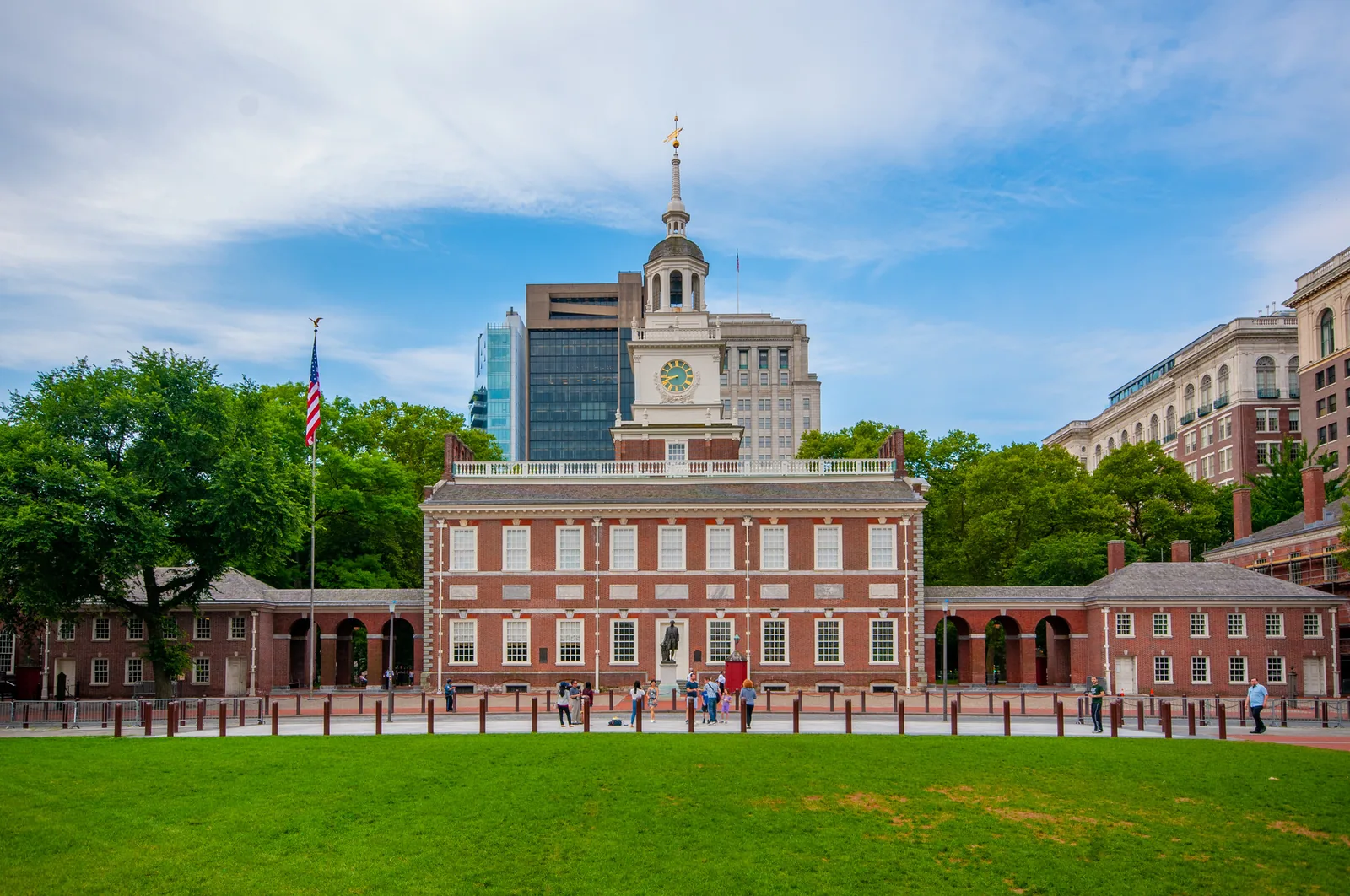
2026 is America's semiquincentennial — the 250th anniversary of the Declaration of Independence — and the most meaningful way to mark it is to drive the ground where independence was actually won. This itinerary follows the Revolution down the East Coast, from the Boston streets where it began to the Virginia field where it ended, using the Washington–Rochambeau Revolutionary Route (the "W3R" National Historic Trail) as its spine: the roughly 680-mile march of the combined American and French armies in 1781, from Newport, Rhode Island to the war-ending siege at Yorktown. Here's the full route north to south — honest pacing, the founding sites worth building a day around, and how to plan around the anniversary-year crowds.
Follow the road to independence — from the first shot at Lexington to the final victory at Yorktown, in the year America turns 250.
What the America 250 road trip actually is
America 250 — also called the "semiquincentennial" — is the national commemoration of the 250th anniversary of American independence. The Declaration was adopted in Philadelphia on July 4, 1776, which makes July 4, 2026 the headline date, and across the year the original thirteen states, the National Park Service, and dozens of historic sites are running special anniversary programming. A road trip is the natural way to see it: the Revolution was never fought in one place — it moved down the coast over six years, from Boston's streets to a Virginia tidewater field, and you can follow that story on the road.
The spine of this route is the Washington–Rochambeau Revolutionary Route, a National Historic Trail usually shortened to "W3R." It traces the 1781 march of the combined Continental Army under George Washington and the French expeditionary army under the Comte de Rochambeau — roughly 680 miles from Newport, Rhode Island, where the French had landed, south through Connecticut, New York, New Jersey, Pennsylvania, Delaware, and Maryland to Yorktown, Virginia, where the allied siege forced the British surrender. This itinerary follows that trail and folds in the two bookend cities every Revolution traveler wants: Boston, where the rebellion started, and Philadelphia, where independence was declared.
America 250 route map
The route at a glance — Boston down to Yorktown, following the Revolution to victory.
When to go in the anniversary year
The route runs the temperate Eastern Seaboard, so the season is forgiving: April through October is comfortable, with spring and fall the sweet spots for walking the historic districts without deep summer humidity. Founding sites are outdoor-heavy — battlefields, town greens, the Freedom Trail, siege lines — so mild, dry weather does more for this trip than it does for a museum crawl.
2026 is the wrinkle. The semiquincentennial means special anniversary programming up and down the corridor, peaking around July 4. That's the emotional high point of the year — and the busiest, hottest, most booked-out window. If you want the ceremony, come then and reserve everything far ahead; if you want the history without the crush, aim for May–June or September–October. Either way, events and timed tickets change constantly in the anniversary year, so check the official America 250 and individual site calendars rather than trusting a fixed schedule. (If you're chasing 2026 milestones, note that the same year marks the centennial of Route 66 out west — a very different kind of anniversary drive.)
Direction, pacing, and logistics
Drive north to south
Follow the march to victory. Start in Boston and Newport, where the war and the W3R both began, and end at Yorktown, where it was won — the story builds from first shots to final surrender, and you finish standing on the victory field instead of doubling back to a city. It also matches the trail's own north-to-south orientation, so the historic markers read in order as you drive.
How long it honestly takes
Eight to ten days is the comfortable range. The driving legs are short — most under three hours — but the sites are dense and slow: Boston's Freedom Trail, Philadelphia's Independence Mall, and Colonial Williamsburg each deserve most of a day. The real constraint here is walking and museum time, not miles. You can compress it to about a week by trimming stops like Newport or Annapolis, but you'll feel the rush. The daily pacing rules in our planning guide still apply even though the odometer barely moves — a "short" day with a battlefield and a founding museum fills up fast.
Flights, rentals, and the anniversary crush
This is a one-way trip: most people fly into Boston and home from a Virginia airport (Richmond, Norfolk, or Newport News/Williamsburg), with a one-way rental. Because the historic cores are compact and walkable, you'll spend more on city parking than on gas — park once and walk each district. And in 2026, book lodging and the marquee ticketed sites months ahead; the anniversary year fills rooms and tour slots that would be easy to grab any other year.
The America 250 itinerary, day by day
Here it is in eight days, north to south, from where the war began to where it was won. Mileages and drive times are planning estimates for the historic routing, not the interstate — and remember the clock here is set by walking and museum time, so build in extra.
Boston, MA — where the rebellion began
Begin in the city that lit the fuse. Walk the Freedom Trail, the 2.5-mile red-brick line that links sixteen Revolution-era sites from Boston Common past the Old State House down to the harbor. Climb to the Old North Church, where the signal lanterns — "one if by land, two if by sea" — launched Paul Revere's ride, then cross to Charlestown for the Bunker Hill Monument, over the Revolution's first major battle. It's a lot of ground on foot, but it's the ideal overture to the whole trip.
Lexington & Concord → Newport, RI
This morning, drive out to Minute Man National Historical Park, where the war actually started on April 19, 1775 — walk the Battle Road and stand at Concord's North Bridge, site of "the shot heard round the world." Then point south for Newport, Rhode Island, and shift from where the war began to where the march to victory began: this is where Rochambeau's French army and fleet landed in 1780, making it the official starting line of the W3R. Wander Newport's colonial waterfront and Revolution-era streets before dark.
Newport, RI → Lebanon, CT
A short, quiet leg into the Connecticut countryside, and one of the most underrated stops on the route. Lebanon's mile-long town green was a French cavalry encampment — the Duc de Lauzun's Legion wintered here in 1780–81 — and the town still keeps its Revolution-era buildings around it, including the war office where Connecticut's governor helped supply the army. It's a small, slow, deeply authentic W3R site with almost none of the crowds you'll hit further south.
Connecticut → the Hudson Highlands, NY
Cross Connecticut and the lower Hudson Valley to the river's great strategic hinge. The armies crossed the Hudson at King's Ferry, between Stony Point and Verplanck, in August 1781 — and just upstream stands West Point, the fortress whose great iron chain was once strung across the river to block the British fleet. Take in the Highlands overlooks and river forts; this is where Washington held the Hudson and the road to Yorktown really opened up.
The Hudson → Morristown & Princeton, NJ
Drop into New Jersey, "the crossroads of the Revolution," where more skirmishes were fought than in any other state. Start at Morristown National Historical Park, Washington's brutal winter headquarters — colder and hungrier, by many accounts, than Valley Forge — then continue to Princeton Battlefield, where his daring January 1777 victory revived a nearly beaten cause. Both are open, walkable grounds that make the war's darkest, most desperate winter feel real.
New Jersey → Philadelphia, PA
On the way into the city, detour to Valley Forge National Historical Park, the 1777–78 winter camp where Baron von Steuben drilled a ragged army into a disciplined one. Then it's Philadelphia, the beating heart of America 250: Independence Hall, where the Declaration and the Constitution were both signed; the Liberty Bell across the mall; and the excellent Museum of the American Revolution, which tells the whole war end to end. This is the fullest day of the trip — give it the time it asks for.
Philadelphia → the Chesapeake → Washington, DC
Trace the armies' path toward the water. They moved through Wilmington, Delaware, to Head of Elk — today's Elkton, Maryland — where thousands boarded ships down the Chesapeake toward Virginia in September 1781. Detour into Annapolis for the colonial capital's brick streets and the Maryland State House, then finish in Washington, DC — a city the founders never saw, but the place that now holds the nation's founding-era monuments and free museums. Overnight in the capital.
Washington → Mount Vernon → Williamsburg → Yorktown, VA
The road to victory. Start just south of the capital at Mount Vernon, George Washington's estate above the Potomac, then drive down to Colonial Williamsburg, the immense living-history town where the allied armies gathered before the final push. From there it's a short hop to Yorktown Battlefield, where in October 1781 the combined American and French forces besieged Cornwallis until he surrendered — the victory that effectively ended the Revolution and won independence. Standing on the siege lines is the right place to end a trip about how the country began.
Only have a long weekend?
The corridor splits into clean segments: New England's origins (Boston, Lexington & Concord, Newport), the mid-Atlantic march (the Hudson, New Jersey, Philadelphia), or the Virginia finale (Washington, Mount Vernon, Williamsburg, Yorktown). Build any one of them — your dates, your pace — in the planner.
Plan your America 250 trip →14 best stops on the America 250 route
If you can't drive the whole thing, these are the founding sites worth building a trip around, north to south.
- The Freedom Trail, Boston (MA) — a 2.5-mile red-brick line past sixteen Revolution sites, from Boston Common to Bunker Hill. The perfect overture.
- Old North Church, Boston (MA) — "one if by land, two if by sea"; the signal lanterns that launched Paul Revere's ride.
- Minute Man National Historical Park, Lexington & Concord (MA) — where the war began, at the North Bridge: "the shot heard round the world."
- Newport (RI) — where Rochambeau's French army and fleet landed in 1780; the symbolic starting line of the W3R march.
- Lebanon (CT) — the mile-long town green where French cavalry wintered, one of the best-preserved and least-crowded W3R encampment sites.
- West Point & the Hudson Highlands (NY) — the fortress that guarded the river and the King's Ferry crossing the armies used in 1781.
- Morristown National Historical Park (NJ) — Washington's hard winter headquarters, sometimes called the military capital of the Revolution.
- Princeton Battlefield (NJ) — where the January 1777 victory revived a nearly beaten American cause.
- Independence Hall & the Liberty Bell, Philadelphia (PA) — where the Declaration and the Constitution were signed; the heart of America 250.
- Museum of the American Revolution, Philadelphia (PA) — the definitive museum of the whole war, from first protest to founding.
- Valley Forge National Historical Park (PA) — the 1777–78 winter camp that drilled a ragged army into a disciplined one.
- Mount Vernon (VA) — George Washington's home and estate above the Potomac.
- Colonial Williamsburg (VA) — America's largest living-history town, and the staging ground before the final push.
- Yorktown Battlefield (VA) — where the 1781 siege ended the war and won independence. The victory finish.
The three great hubs of the Revolution
If the road trip has a shape, it's three cities that mark the Revolution's beginning, middle, and end. Short on time? String these three together and you've hit the story's whole spine.
| Boston, MA | Philadelphia, PA | Yorktown, VA | |
|---|---|---|---|
| Its role | Where it began | Where independence was declared | Where it was won |
| Key years | 1770–1775 | 1776 | 1781 |
| What happened | Massacre, Tea Party, and the first shots at Lexington & Concord | The Continental Congress adopted the Declaration of Independence | The allied siege forced Cornwallis's surrender, ending the war |
| Don't-miss sites | Freedom Trail, Old North Church, Bunker Hill, Minute Man NHP | Independence Hall, the Liberty Bell, Museum of the American Revolution | Yorktown Battlefield, the siege lines, the Victory Monument |
Together they're the arc of America 250: Boston lit the fuse, Philadelphia declared the cause, and Yorktown secured it. The middle days — the W3R march down the coast — are the connective tissue that makes the story move.
Costs and practical tips
A rough per-person budget for the full 8–10 day drive, based on two people sharing a car and mid-range hotels. These are planning estimates, not live prices — and city lodging runs higher in the anniversary year, so check current rates before you book.
| Item | Estimate | Notes |
|---|---|---|
| Fuel | $90–$140 (whole car) | ~900 mi at ~28 MPG ≈ 32 gallons; short miles, lots of slow city driving. |
| Lodging | $140–$260 / night | Boston, Philadelphia, DC, and Williamsburg run high — higher still in 2026. |
| Food | $50–$80 / person / day | City dining most nights; historic-tavern meals in Williamsburg cost more. |
| Sites & museums | $150–$300 / person total | Many founding sites are free; Colonial Williamsburg, Mount Vernon, and the Museum of the American Revolution charge. |
| Parking & tolls | $120–$220 total | Northeast tolls plus pricey downtown parking in Boston, Philadelphia, and DC. |
| 8–10 day total | ~$1,700–$2,900 / person | Two sharing a car; more with a one-way rental fee and peak-2026 rates. |
Practical tips
- Book the anniversary-year headliners early. Independence Hall's free timed tickets, Colonial Williamsburg, and popular tours sell out fast in 2026 — reserve months ahead.
- Check official calendars, not rumors. America 250 events and timed tickets change constantly; confirm dates on the official America 250 and individual site websites before you build a day around them.
- Lean on the free sites. The Freedom Trail, the Independence Hall tour, the National Mall, and most battlefields cost nothing — spend your budget on the ticketed living-history sites instead.
- Park once and walk. The historic cores of Boston, Philadelphia, Annapolis, and Williamsburg are compact and walkable, so leave the car and save on downtown parking.
America 250 road trip FAQ
What is the America 250 road trip itinerary?
It's a Revolutionary War road trip down the East Coast, timed to America's 250th anniversary in 2026. It follows the Washington–Rochambeau Route — the 1781 march from Newport, Rhode Island to Yorktown, Virginia — and folds in Boston and Philadelphia, running roughly 8–10 days from where the war began to where it was won.
How long does the Revolutionary War road trip take?
Plan 8–10 days to do it comfortably. The driving legs are short — most under three hours — but the founding sites are dense and slow, so the real constraint is museum and walking time, not miles. You can do it in about a week by trimming stops like Newport or Annapolis.
What is the Washington–Rochambeau Route (W3R)?
It's a National Historic Trail marking the roughly 680-mile 1781 march of the combined American and French armies, under Washington and Rochambeau, from their landing at Newport south to the war-ending siege at Yorktown. It runs through Rhode Island, Connecticut, New York, New Jersey, Pennsylvania, Delaware, Maryland, Virginia, and Washington, DC.
When is the best time to drive it in 2026?
April through October, with spring and fall the most comfortable for walking the historic districts. Anniversary programming peaks around July 4, 2026 — the most meaningful window, but also the busiest and hottest. Events and timed tickets change constantly, so check the official America 250 and individual site calendars before you lock a date.
Where does the route start and end?
North to south, it starts in Boston and Newport — where the war and the march began — and ends at Yorktown, Virginia, where the 1781 siege secured independence. Most travelers fly into Boston and home from a Virginia airport with a one-way rental.
Is it worth doing in the anniversary year, with the crowds?
Yes — 2026 brings special programming you won't see again in a lifetime — but book ahead. Marquee sites like Independence Hall and Colonial Williamsburg get very busy in the anniversary year, so reserve timed tickets and lodging months in advance, or travel in the May–June or September–October shoulders for a quieter visit.
Turning this into your America 250 trip
This trip rewards a simple plan: pick your 2026 window — the July 4 peak for the ceremony, or a shoulder month for the history without the crowds — then lock the three anchors first (a Boston start, Philadelphia, and Colonial Williamsburg), because their timed tickets and lodging drive everything else. Build the shorter legs to flex around them, and give the Virginia finale an extra night so Mount Vernon, Williamsburg, and Yorktown don't get rushed. If you have days to spare at the end, Virginia's Blue Ridge Parkway makes a scenic decompression drive west before you fly home. Then point the car south and follow the Revolution to its victory.
Plan your own America 250 road trip
Turn this itinerary into a personalized plan — your dates, your pace, your car — with a live map, daily driving times, weather, fuel estimates, and where-to-stay links.
Open the planner →